Stitching Together Communities: Why Crochet and Knitting Meetups Are a Must for Every Town

By Nicki Byrnes

October 22, 2024

What if your town had a space for people to connect, learn something new, and enjoy a shared passion for crafting? A crochet and knitting meetup could be the perfect solution to foster community and creativity in your town.

Most people enjoy connecting with others and having fun, so what better way to foster both than by hosting a free crochet and knitting meetup in your town? These gatherings offer numerous benefits:

Connecting Across Generations

Yarn meetups are a fantastic way to build connections. Whether you’re an experienced crocheter or just curious to learn, these gatherings create a welcoming space where everyone can share their passion for crafting. Crochet and knitting are for everyone these days – my daughter and I both love to crochet, she has friends and friends’ siblings who crochet, and I’ve had the joy of teaching people of all ages. Crochet is no longer just for grannies (although love and welcome them too!). It’s a major trend right now that unites us all. A town crochet and knitting meetup is a chance to meet new people, forge friendships, and learn from one another, bridging the gap between generations.

Boosting Your Town’s Reputation

Hosting yarn meetups can also enhance your town’s reputation, both within the community and beyond. Offering the opportunity for townspeople to connect makes residents love where they live. It makes people outside your town want to live in your town.

Generating Awareness for Local Businesses

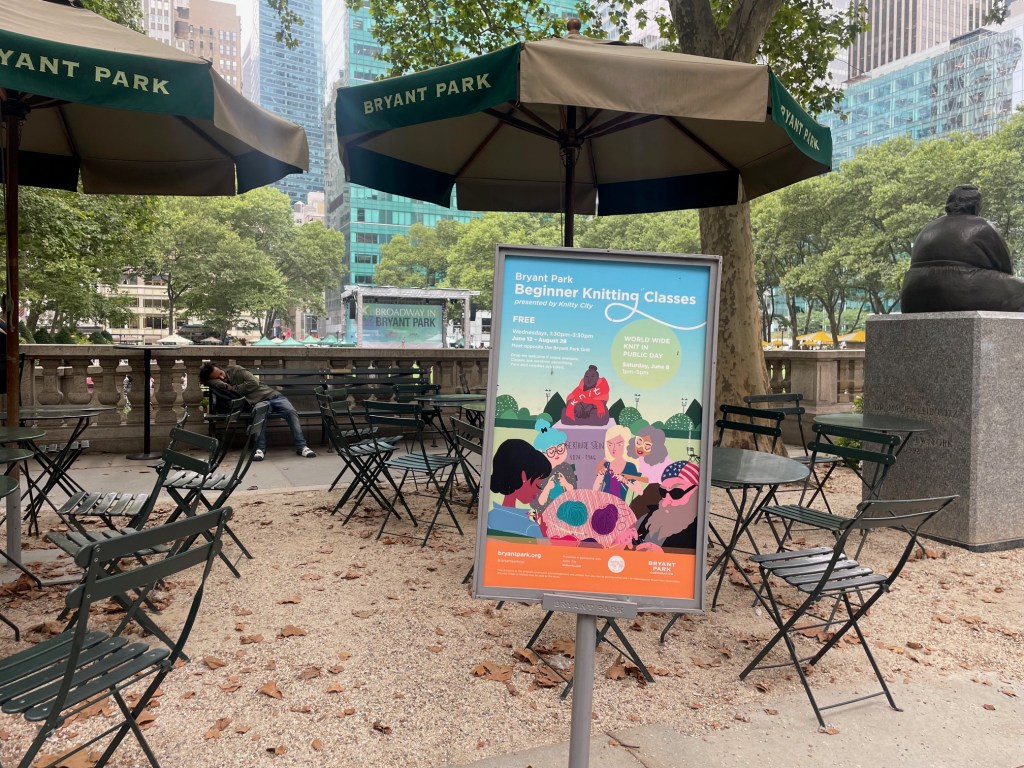
Just like the successful knitting events at Bryant Park in NYC, where they collaborate with local yarn shops, your town can create something special that highlights local businesses. For example, it could generate brand awareness for your local yarn shop as a sponsorship opportunity. They get their name out there in the promotional materials for the event, and in return, they provide free skeins of yarn, crochet hooks, or yarn needles for attendees to use.

Beyond yarn shops, local businesses would benefit from the increased foot traffic generated by these meetups. The coffee shop next to the park, for example, would likely welcome the extra customers looking to grab a drink before or after their gathering.

Photo of free beginner knitting classes offered at Bryant Park

And that’s not all! There are plenty of other reasons, including:

Volunteer Opportunities: Organizing meetups can create roles for volunteers, enhancing community involvement and creating opportunities for high schoolers to get those volunteer hours completed.

Health Benefits: Crafting has been shown to reduce anxiety and improve mental health, creating a supportive environment for well-being.

Family-Friendly Activity: It’s a great way to engage families, allowing parents to bond with their children over a fun and engaging activity.

How to Start a Yarn Meetup in Your Town

  1. Contact Your Town: Email your Parks and Recreation board, or whomever is in charge of town events and activities.
    • If you don’t have a specific team of people, send a general inquiry. Most town websites have a contact form or email address.
    • Offer to do the hosting and planning if they will handle the announcement and promotion of the event via their community communication channels.
  2. Find a Space: Look for a community center, park, school gymnasium, or local shop that would host the gatherings. Your town contact will likely have suggestions.
  3. Choose Your Format:
    • Instructor-Led Classes: Have a qualified instructor (local yarn shops will have suggestions if your town does not have someone) lead a fun, quick, and simple project, like a cute hat or easy scarf. I suggested my Bengals-inspired crochet hat to my town since it’s popular in Cincinnati and a straight-forward pattern.
    • BYO Project Meetups: Participants bring their own projects to work on while chatting.
    • Learn to Crochet Sessions: Again, this requires an instructor or someone qualified. Perfect for people in town interested in learning or picking up a new hobby.
  4. Reach Out for Support: Contact local yarn shops for sponsorship opportunities. They may be willing to provide supplies or promote the event, just like the partnership with Knitty City at Bryant Park.
  5. Spread the Word: Use social media, community boards, and local groups to get the word out about your meetup.

Yarn meetups are a fantastic way to strengthen community ties, inspire creativity, and celebrate our shared love for fiber arts. So why not start one in your town?

Tell me – Does your town already host a crochet/knitting gathering? Let me know what you love about it or would do to improve it so we can all make our towns a little more connected, one stitch at a time!

The Rise of AI in Crochet

By Nicki Byrnes

October 15, 2024

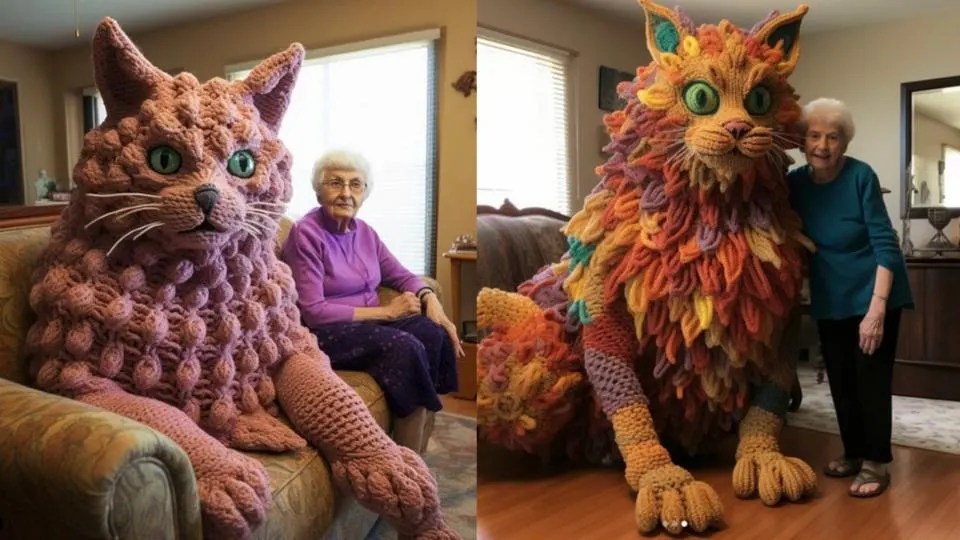
Have you seen any of the AI-generated crochet images on the internet, like these sweet grandmas who appear to have made the world’s largest crochet cats?

AI generated crochet cats

Don’t Be Fooled

While these visuals can be entertaining, they aren’t real; they’re generated by AI, or artificial intelligence, and are prevalent across the internet. This isn’t an issue when they’re just being used for likes and entertainment. What becomes problematic is when crochet “designers” use AI to create enticing photos and patterns and sell them. Without actual knowledge of how to design a piece and write its pattern, the final products fail to match the promised designs. This leaves paying customers frustrated and disappointed.

Writing a pattern is hard work. It takes a lot of thought to translate an idea or sketch into a written crochet pattern. Many crochet designers have loads of experience writing patterns so they are user-friendly. Some event have them tested by paid pattern testers before publishing to ensure accuracy. That is not happening with AI generated patterns, as you can see in this video or this NBC News article. This is frustrating for those who paid for the pattern and invested time in the project. Ultimately, it sheds doubt on future pattern purchases.

How can you discern a real vs. AI-generated crochet pattern? This Reddit thread highlights 3 signs:

  1. Cinematic, movie-like lighting and/or backgrounds
  2. Unrecognizable or confusing stitch types in the photo
  3.  Very large and epic projects, like the cats above or the popular car images

Let’s Test it Out

I tested chatgpt’s capability using a simple scarf pattern idea. I told it the type and color of yarn, crochet hook size, and stitch type to use and asked it to write the pattern. Overall, it looked pretty good. It had errors, like saying it will have 203 “wraps” when it meant stitches. Those little details can become major problems as a pattern gets more complicated.

AI crochet pattern

I also asked it to create an image of the finished piece based on the pattern. Notice all the different stitch types, despite the pattern saying it is only single crochet. The neck portion looks like bobble stitches at the top, below it looks like puff stitches, and then ends of the scarf look like knitting! Also, the pattern never mentioned gray.

AI crochet scarf

Pros & Cons

It will be groundbreaking when AI can write a perfect crochet pattern for you in seconds. Being able to sketch a design, upload it, and receive a ready-to-use pattern within moments would drastically simplify the process. However, as seen with my scarf, this convenience comes with pros and cons.

How cool would it be to get instructions (for free!) handed to you so you can crochet whatever you dream up? It would make crochet design accessible for everyone. Gone would be the need for prior experience or hours of research. It would save SO much time and effort. It would take out all the guesswork, trial and error, and frogging that often goes into pattern design.

It takes work to figure out how to write a pattern. It requires an understanding of how pieces are made, like all the various garment construction methods. Having AI write your crochet pattern would reduce all that time previously spent on the components of a good crochet pattern, including:

  • What tools and materials you used
  • Your gauge
  • The finished size/dimensions
  • Pattern notes with tips and special instructions like unique stitches
  • Stitch and row counts that will result in the aforementioned size
  • Row by row instructions that are easy to follow and accurate so the user ends up with the same piece you did
  • You have to actually crochet the piece to make sure your instructions are correct
  • Photos of the finished product for marketing

Having AI do all that work for you would be an amazing resource. But there are cons. Just as we learn fundamental math before relying on calculators, understanding the basics of crochet pattern writing is important. We need to understand the “why” of how things work.

We still need to know what elements go into writing a pattern to understand how crochet pieces are made. Our choices impact the piece, like which construction method will lay the best on a body, which yarn will result in the right drape, or which stitches will create your desired texture. Any crocheter can spot a quality handmade crochet piece versus the products sold in stores like Target right now. For the sake of our craft and maintaining its integrity, we can’t let our knowledge of its intricacies die.

Bottom line, AI isn’t going anywhere. As it improves in creating accurate crochet patterns, my hope is crocheters will still prioritize fully embracing the craft. It’s vital to comprehend how a set of instructions leads to a specific finished product. Keep experimenting with stitch options and exploring yarns to understand how its width and material affects a final piece. Most importantly, let’s continue to support and value the work of designers who invest their time and effort into creating beautiful, tested patterns for the sake of others to enjoy.

To get started on your crochet design journey, check out my blog posts, How to Design a Crochet Sweater: Intro and How to Design a Crochet Sweater: Step-by-Step Guide.

Or, read about my first magazine cover design, my Retro Revival Granny Square Sweater.

What’s Up with Knitting Tourism in Iceland?

By Nicki Byrnes

October 8, 2024

Did you see the recent New York Times article about a knitting vacation in Iceland? It highlights a fascinating trend: knitting tourism is blossoming in Iceland, where an abundance of sheep and a deep-rooted tradition are luring visitors eager to embrace the cherished pastime.

The writer goes on a road trip from Reykjavik with an Icelandic knitting instructor and details the challenges of mastering the craft. The journey shows how knitting offers a unique lens into Icelandic culture, providing an alternative to the usual tourist attractions while celebrating the country’s rich heritage in wool production and craftsmanship.

Sounds great – gorgeous and covetous, in fact. But what exactly is knitting tourism and why is it gaining traction in Iceland?

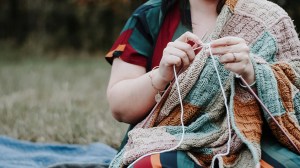
Woman knitting in nature

The Rise of Knitting Tourism

The surge in knitting-themed tourism, with experiences like “Knitting Under the Northern Lights,” is gaining traction among fiber artists. The tours blend the country’s breathtaking landscapes with its vibrant knitting culture, allowing visitors to engage hands-on with Icelandic traditions. Several factors contribute to this travel trend:

  • Cultural Immersion: Tourists are increasingly seeking authentic experiences that connect them to local traditions.
  • Sustainable Travel: Knitting tours align with the growing interest in eco-friendly and slow tourism.
  • Therapeutic Benefits: Known for its calming effects, knitting serves as an appealing stress-relief activity during vacations.
  • Unique Souvenirs: Visitors have the chance to create their own Icelandic-inspired knitwear, providing meaningful mementos from their travels.
Iceland town

The Icelandic Knitting Legacy

What does Iceland have to do with knitting? Icelandic knitting has shaped the country’s identity for over 500 years, dating back to around the 16th century. In a country where sheep thrive in harsh climates, wool production and knitting were essential for survival and economic sustenance.

They even have their own prominent yarn type – Icelandic Lopi, known for its unique composition. It has soft inner fibers with long, glossy, water-repellent outer fibers. This results in lightweight yet warm garments that keep wearers comfortable in unpredictable weather.

Then there’s the Handknitting Association of Iceland – a proud symbol of the nation’s heritage, illustrating the resilience of its people against harsh climates and the importance of knitting in the local economy.

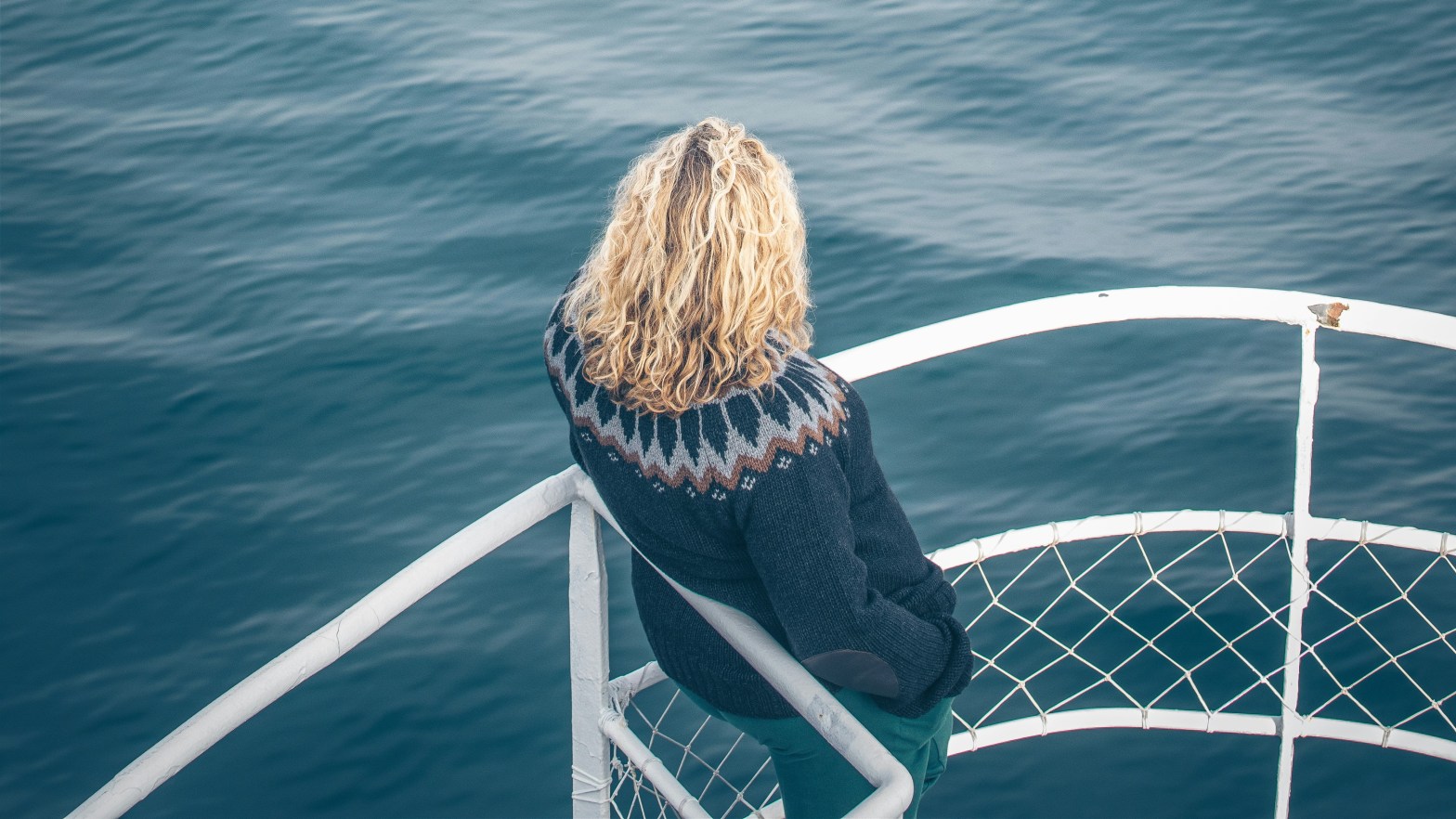
Additionally, the iconic Lopapeysa, or Icelandic sweater, emerged in the early to mid-20th century as a response to changing clothing styles. Today, it remains a beloved symbol of Iceland’s knitting culture.

Lopapreysa, Icelandic knitted sweater design

Icelandic knitting’s influence also extends beyond garments. The “Nordic noir” literary genre has given rise to a subgenre dubbed “Knitting noir” or “Woolly noir.” These mystery novels incorporate knitting themes or protagonists who are avid knitters.

Why not Pittsburgh?

You might wonder why knitting knitting culture is thriving in Iceland specifically. While every region has its unique charms, these elements combine to position Iceland as a top destination for travelers seeking adventure, natural beauty, and cultural richness:

  • Stunning Natural Landscapes: Renowned for its breathtaking scenery, Iceland boasts glaciers, waterfalls, geysers, and volcanic formations. The Golden Circle, featuring Þingvellir National Park and Gullfoss waterfall, showcases the country’s geological wonders.
  • Unique Experiences: Visitors flock to witness phenomena like the Northern Lights and the midnight sun. Activities such as hiking in rugged terrain, relaxing in geothermal hot springs, and exploring ice caves create unforgettable memories.

I would be remiss if I didn’t mention the iconic Lopapeysa sweater can be replicated in crochet. You can achieve a very similar look with patterns like this free one I found on Ravelry.

So, does the idea of visiting Iceland for a knitting retreat intrigue you? I swear I’m not sponsored by the Icelandic Tourism Board, but I would happily accept an all-expenses paid trip if they’re interested. I think I’d even learn to knit for it.

Go Taylor’s Boyfriend! Score Big with This Adorable Kansas City Chiefs Crochet Hat Pattern 🏈

September 30, 2024

By Nicki Byrnes

Check Out My New Hat Design

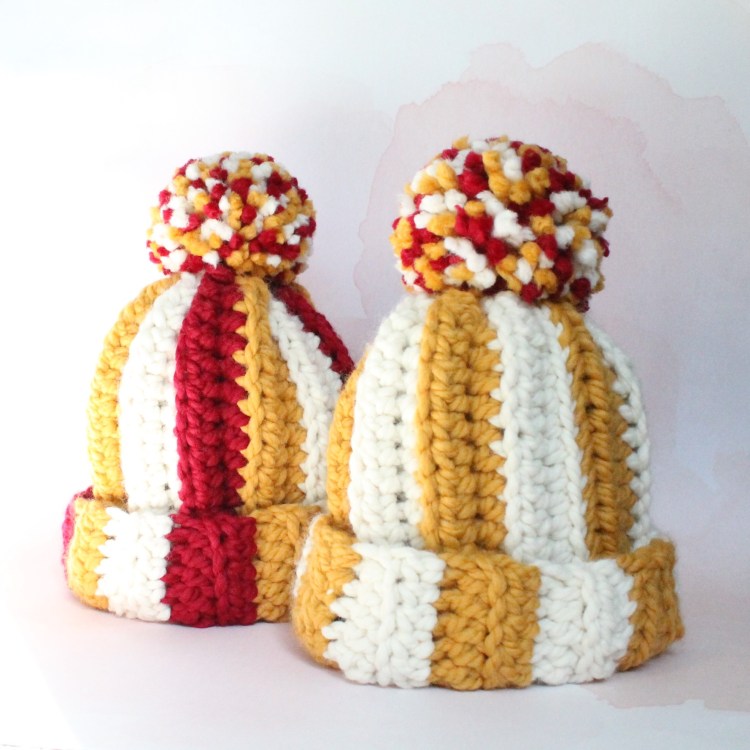
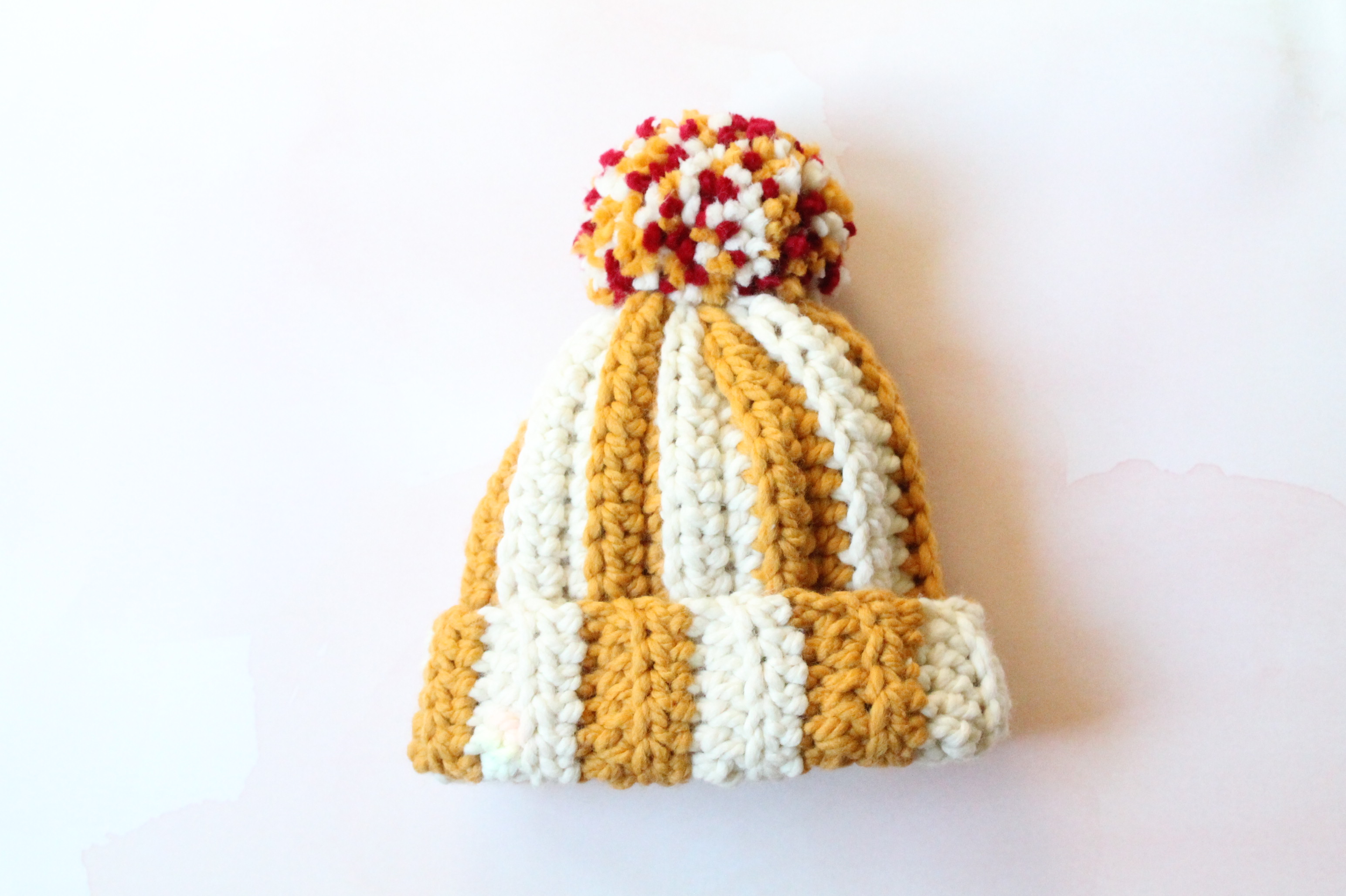
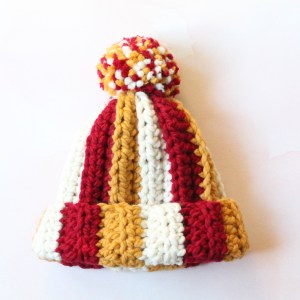
Yellow and white stripe crochet hat with red, yellow, and white oversized pom pom
Kansas City Chiefs Crochet Hat Pattern

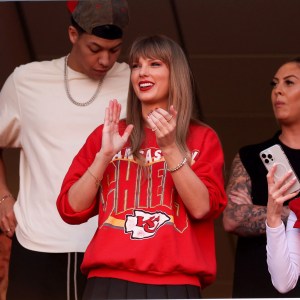
On the hunt for a super cute crochet hat pattern to show your support for Taylor, I mean Taylor’s boyfriend? Whether you’re a die-hard Chiefs fan or a Swiftie who loves a cozy crochet project, I have the perfect pattern that’s bound to make your heart (and head) happy.

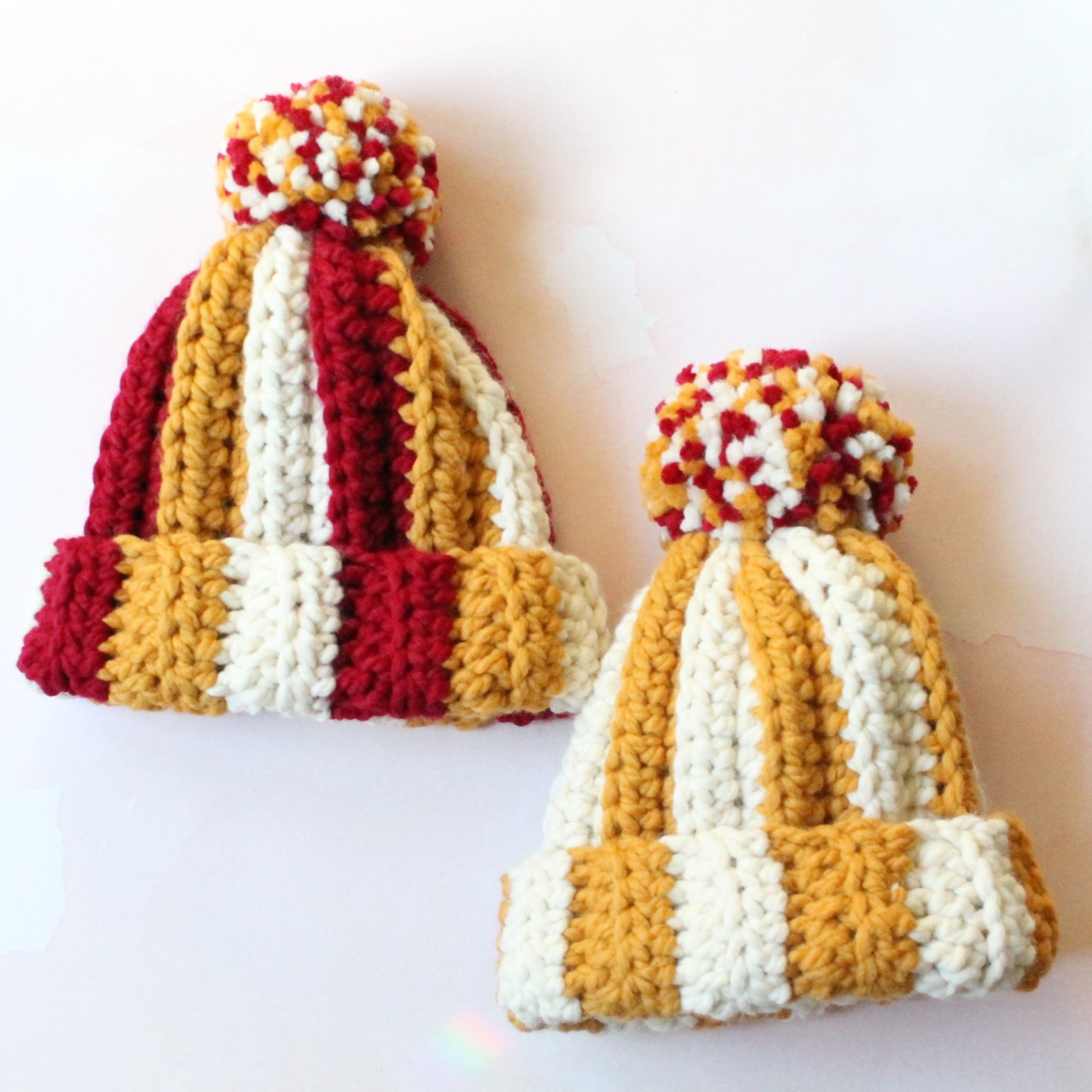
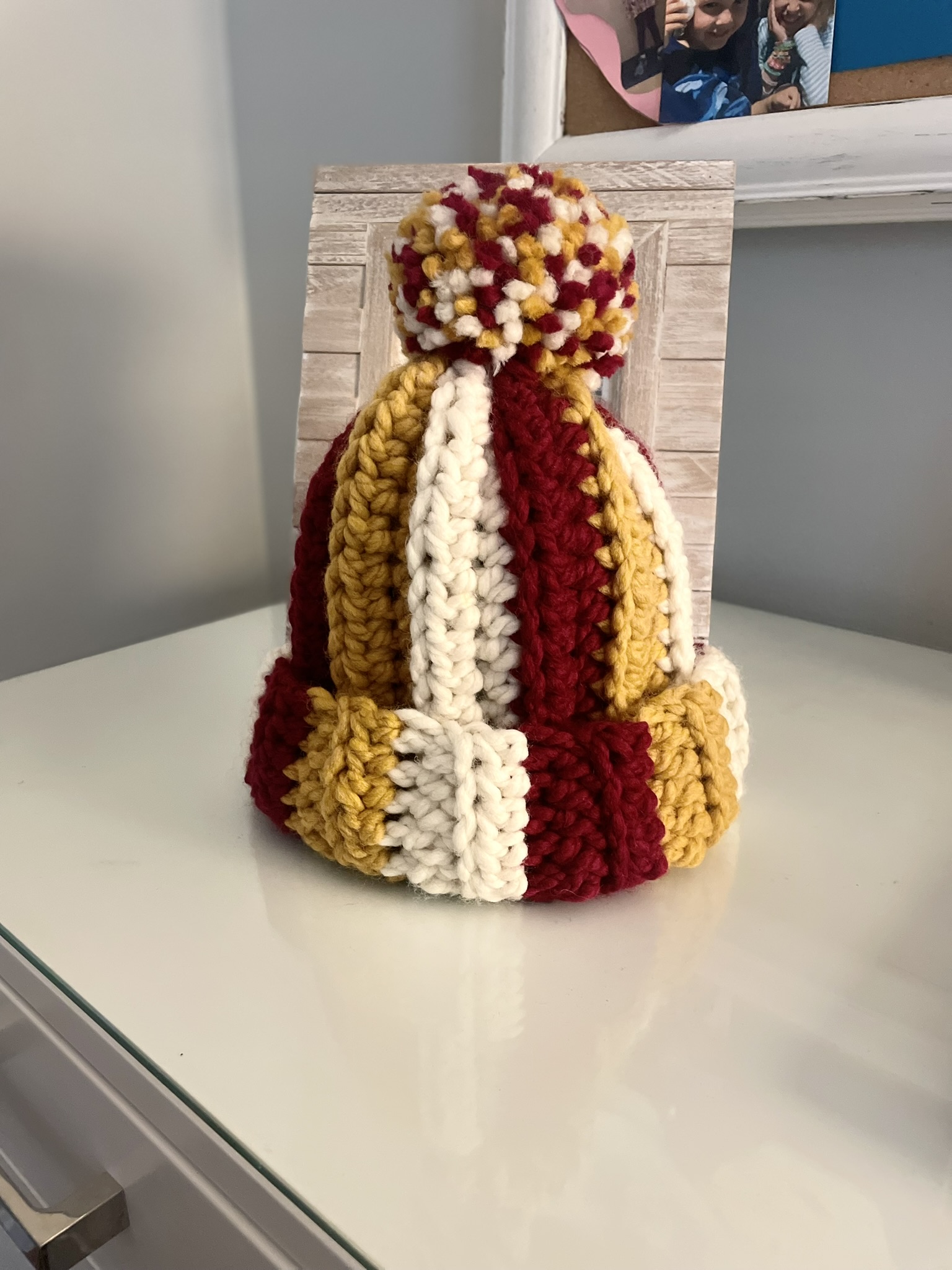
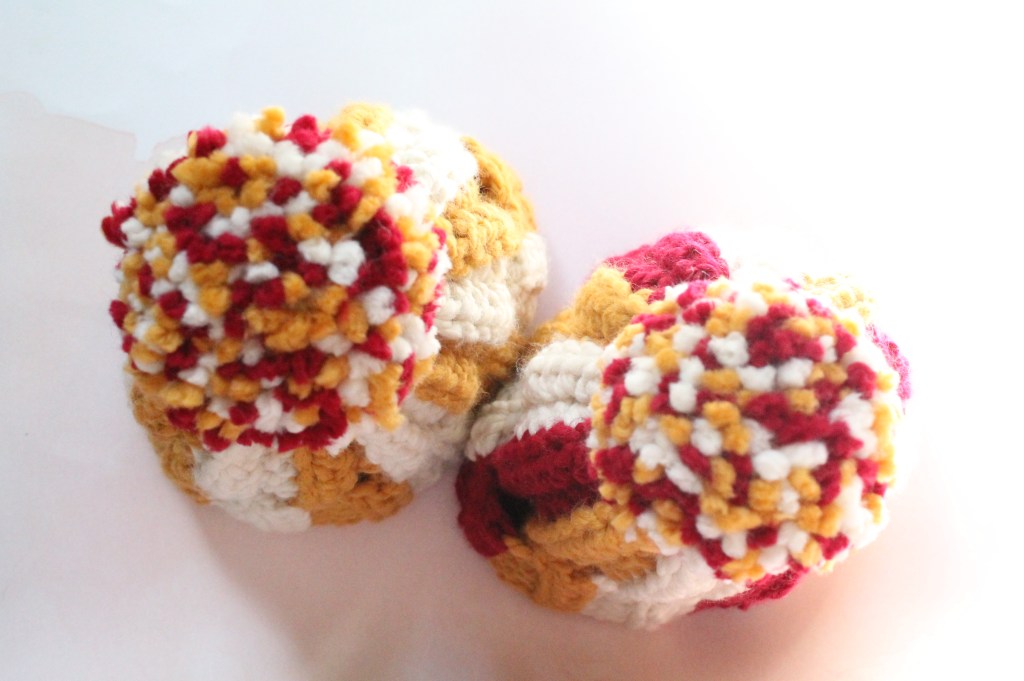
This crochet hat design is based off of my most-requested hat and is similar to one I made years ago. I love it for its eye-catching alternating stripes in the Chiefs’ iconic colors, giving it a vintage-inspired vibe that’s both stylish and spirited. The real show-stopper is its oversized, fluffy pom pom on top in team colors. The colors themselves are flattering and aesthetically-pleasing, featuring a combination of mustard, cranberry, and off-white.

Red, white, and yellow striped crochet hat with oversized pom pom

Why You’ll Love This Pattern:

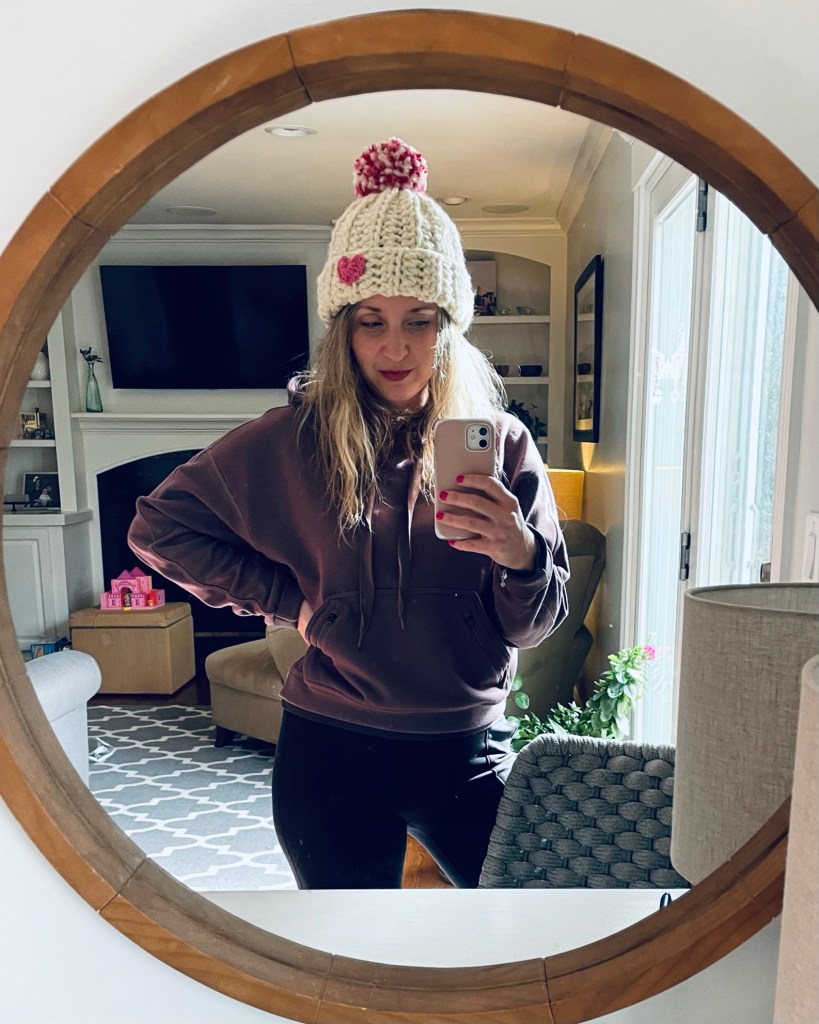
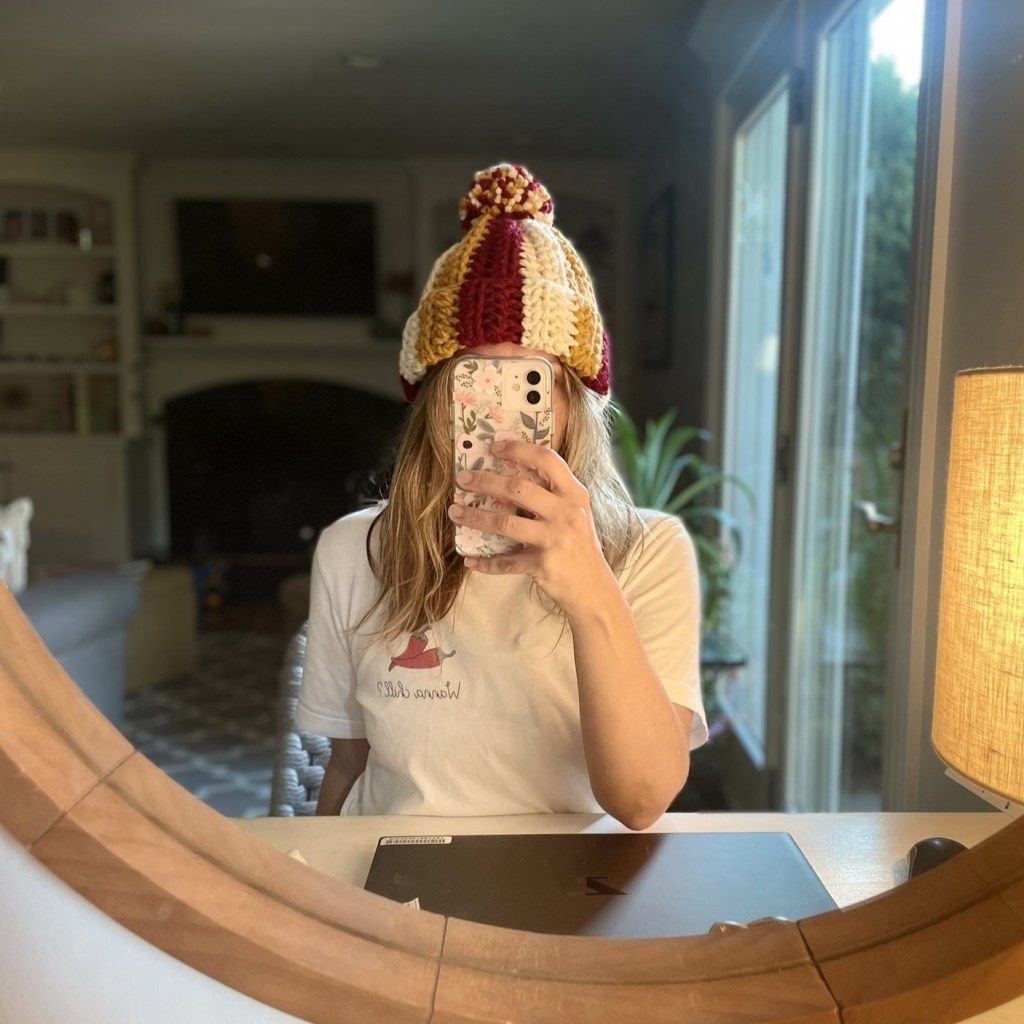
Woman wearing crochet hat in Kansas City Chiefs colors
  • Quick and Easy: Using Lion Brand Wool Ease Thick & Quick yarn (one of my favorites!), you can whip this hat up in just one evening. It is a satisfying repeat of rows and you will not be weaving in a bunch of ends for the stripes. Perfect for those last-minute game day plans!
  • Soft and Comfortable: I love Wool Ease Thick & Quick and use it for my patterns often. It’s readily available at craft stores and online, affordable, and is made from a wool/acrylic blend. The wool makes it soft and warm, but it isn’t itchy since it’s not made of 100% natural fibers. This also makes it more washable and durable.
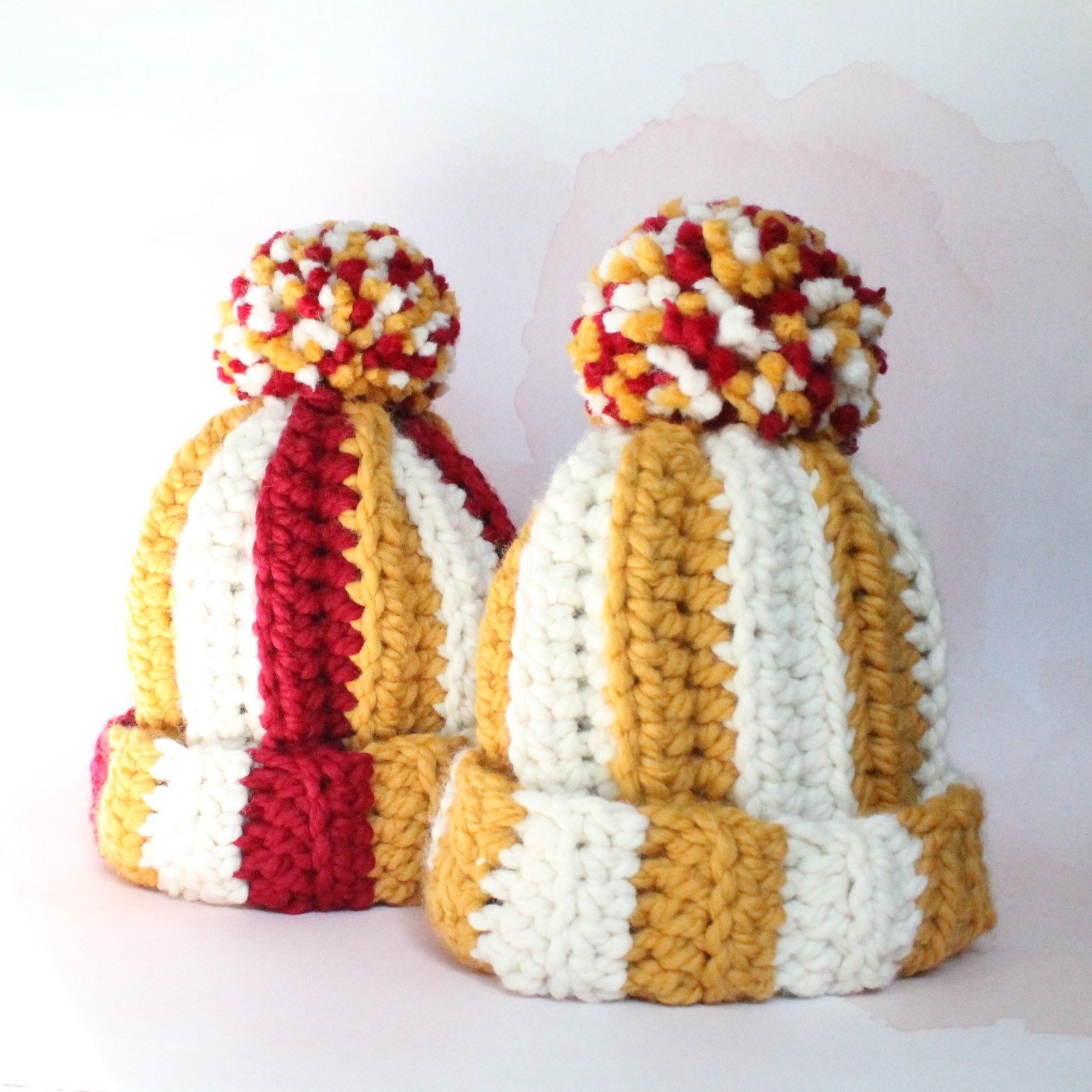
  • Two Designs + Two Sizes: The pattern includes 2 designs, one with three stripes and one with two, as shown below. It also includes two size options, so you can choose between a snug fit to keep you warm and cozy or a looser size that’s still super comfy but a little more giving. My husband and I can both wear the larger size, but I love how the smaller version keeps my head toastier.
Two crochet hats in red, yellow, and white in support of the Kansas City Chiefs

Now Available on Etsy!

On the hunt for a super cute crochet hat pattern to show your support for Taylor, I mean Taylor’s boyfriend, I mean the Kansas City Chiefs? Whether you’re a die-hard Chiefs fan or a Swiftie who loves a cozy crochet project, I have the perfect pattern that’s bound to make your heart (and head) happy.
Kansas City Chiefs Crochet Hat Pattern

Check out the pattern on Etsy and let me know what you think! I have a limited number of finished hats listed as well.

Can’t wait to see you sporting your new hats. Go, Taylor! I mean, Go Chiefs! ✨

Getty Image

Pumpkin Spice & Everything Nice: Why Autumn Captivates Us, and My New Fall Crochet Idea

September 23, 2024

By Nicki Byrnes

I stumbled upon the cutest pumpkin crochet pattern. Tiny round pumpkins with little green stems made of chains, strung into a charming garland that will warm your insides faster than a pumpkin spice latte. It perfectly captures the rustic, cozy essence of Fall.

That begs the question, what is it about this season that we all love so much? It’s my favorite, though I can’t pinpoint when that started. Is it the colorful, cozy aesthetic? The shift to warmer clothing? The symphonic sounds of leaves crunching under your feet? Or am I simply swept up in the pumpkin spice craze? (It’s not the latter.) Fall has certainly been romanticized on social media lately, and I can’t be the only one noticing it.

The Rise of Fall

Turns out, it’s not just me. The surge of fall-themed content on social media began in the early 2010s, as lifestyle influencers carved out a niche around seasonal aesthetics. Platforms like Pinterest exploded with images of fall foliage, cozy sweaters, and warm drinks, creating a visual culture that resonated with content consumers. TikTok further amplified this trend, with creators posting fall content as early as mid-July, building excitement long before the season officially began.

We can’t ignore the impact the pumpkin spice latte had in Fall’s rise to popularity, which ignited the nationwide passion for all things pumpkin spice when it debuted in 2003. This drink’s comforting aroma evokes nostalgia and warmth associated with autumn, leading consumers to eagerly await its return each year. The pumpkin spice phenomenon has solidified its place in American culture, generating billions in sales and inspiring countless products. Even though I don’t drink them, I still love to see them rolled out because I know that means Fall is coming. I even purchased pumpkin spice cheese the other day (to make my husband try, of course).

I’m a sucker for all the Fall content too. Have you watched any of the fall coffee house videos on YouTube? I love playing them while I work. My daughter and I are currently binge-watching season 1 of Gilmore Girls, which has come to epitomize Fall. I’ve already watched You’ve Got Mail this month, and I’m loving the comfy matching sweat sets trend. The memes celebrating the season are the cherry on top. Or, you could say, the whipped cream on top of the pumpkin pie.

Now Back to Crochet

Fall also inspires me to think of crochet in ways I forget about during the summer. That little crochet garland I saw got me dreaming up other cute creations I could make. Unfortunately, with work, school, and activities all ramping up, I regret to say I haven’t crocheted much lately – not since my 4th of July granny square tank top, in fact.

My 4th of July Granny Square Tank Top

Years ago, I made a bunch of crochet pumpkins you can see in this video. I crocheted one for each of my kids’ teachers and heard they still put them on their desk every Fall. I look forward to getting mine out every year, too. There are tons of variations available now; you can find them made with granny stitches, faux cable knit, even leopard print.

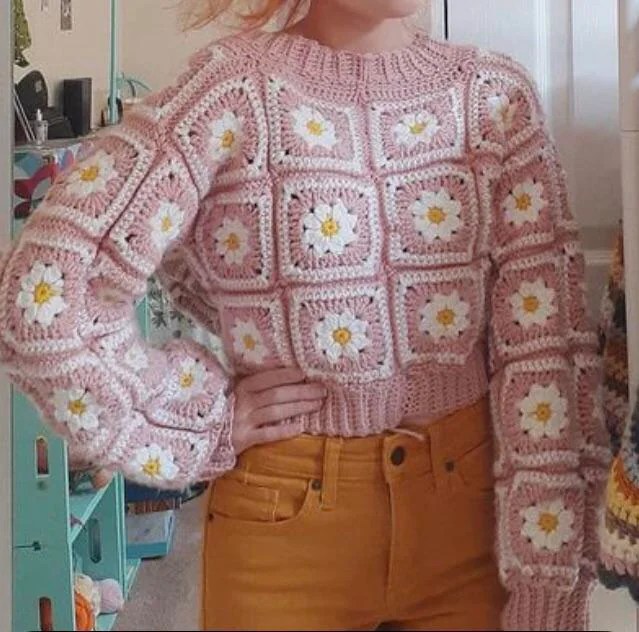
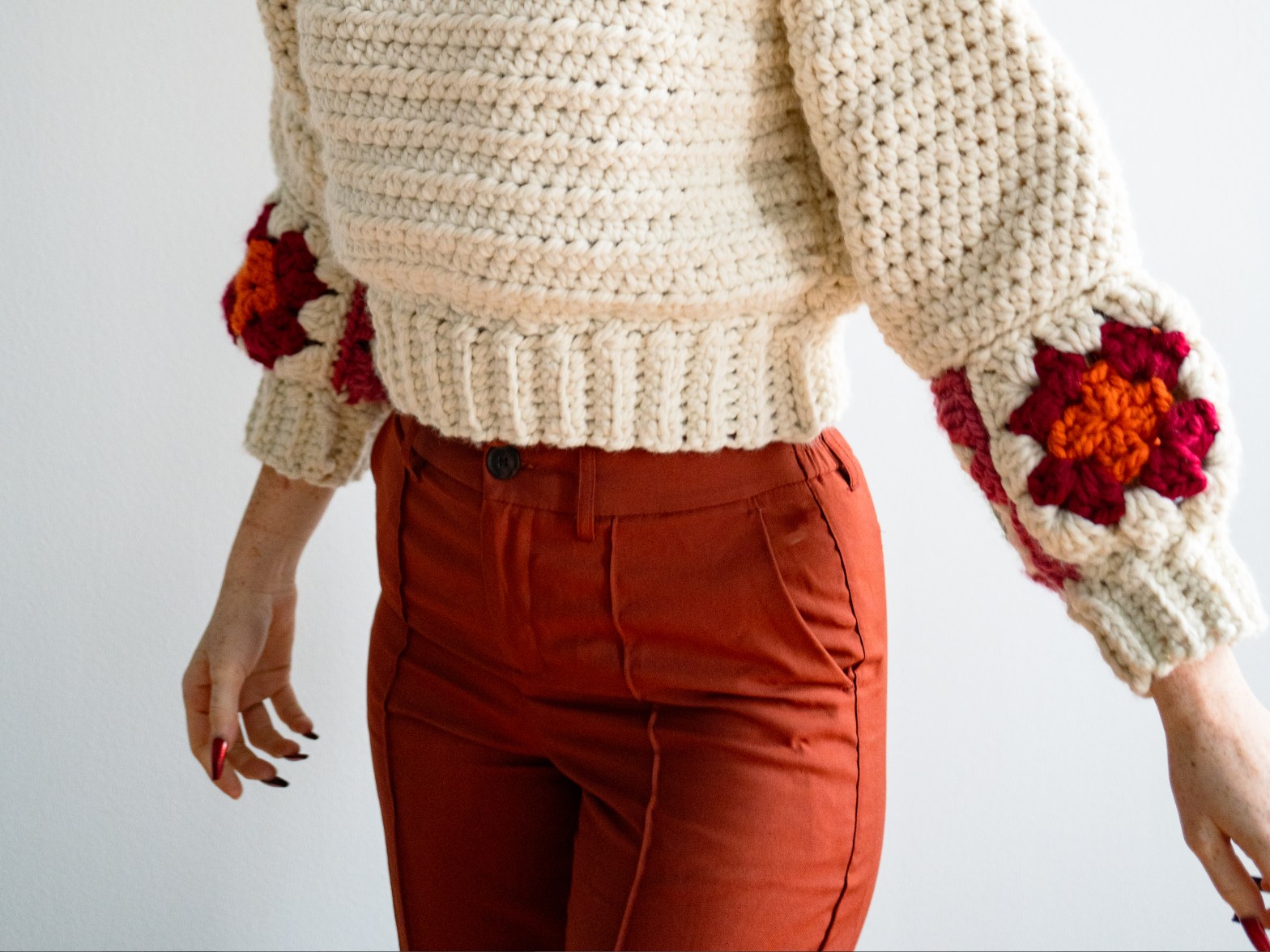
I’d love to make something different this year, though, and the pumpkin garland has me thinking about pumpkin granny squares! I did a quick search and found several different styles online. I found a few appealing videos, and Yarnspirations has this fun pumpkin patch granny square blanket (I’d use an off-white instead of the green, personally). But how cute are the squares?! I’d love to use them on the sleeve of a sweater like this sweater I designed, as the final row at the base of an otherwise super simple sweater, or sewn together to comprise the whole sweater, like the image below. That would be so cute!

In Conclusion

The allure of fall content lies in its ability to evoke nostalgia and comfort. Many associate autumn with cherished childhood memories, like returning to school, family gatherings, and seasonal festivities, making these visuals especially resonant. Influencers tap into this sentiment by curating content that highlights warmth and coziness, from hot drinks to picturesque landscapes.

As audiences engage with fall-themed posts, social media algorithms promote this content, ensuring its prevalence across platforms. This cycle has solidified fall’s status as a beloved theme in online culture, reflecting our collective longing for comfort and joy during this transitional season. I don’t see this trend fading anytime soon.

What are your thoughts on the fall craze? Are you embracing the cozy aesthetic, and have you noticed its rise in popularity over the years?

Mastering Crochet Sleeves

By Nicki Byrnes

August 29, 2024

Design your own crochet sweater and ready to get your sleeves just right? The simplest ways to make a sleeve is either by crocheting a long rectangle, seaming it together, and then attaching it to your sweater body, OR attaching your yarn onto the already-assembled body panels where the armhole is, crocheting around the armhole, and continuing to crochet around until you reach your desired length. The one draw back to these methods is they will both be loose sleeves, the same width from the shoulder to the wrist.

If you want your sleeves to get narrower as they go from the shoulder to the wrist, you have to decrease as you crochet your sleeve. Decreasing for a crochet sleeve is like tailoring your own personal fit; it ensures your sleeve looks great and feels comfortable. Here’s a guide to help you determine how much and where to decrease, and nail that perfect sleeve shape:

1. Know Your Sleeve Measurements:

  • Width at the Upper Arm: Measure around the upper arm where the sleeve will end (usually at the shoulder or armpit). (Image 7 here)
  • Width at the Wrist or Desired Ending: Measure around the wrist or the point where the sleeve should taper off. (Image 12b here)
  • Note: The Craft Yarn Council has published standard size measurements that you can use if you’re not seeking a completely custom fit. See all of the measurements they include here and look on the right for the different categories and respective measurements.

2. Understand the Sleeve Design:

  • Set-in Sleeve: Fits into the armhole of the sweater and often requires more shaping.
  • Raglan Sleeve: Continuous with the body and shaped with decreases that follow the raglan lines.
  • Drop Sleeve: Wider and hangs more loosely, typically needing fewer decreases.
  • Here is a helpful image. Click on it to read more.

3. Calculate the Decrease Rate:

  • Determine Total Decreases: Calculate how many stitches you need to decrease to reach the desired width from the upper arm to the wrist.
    • Formula: Subtract the wrist measurement from the upper arm measurement to find the difference. Divide this difference by your row gauge (the number of rows per inch or centimeter) to determine how many rows you’ll need to decrease over.
  • Spacing Out Decreases: Decide how frequently to decrease based on the total number of rows.
    • Example: If you need to decrease 20 stitches over 40 rows, you’ll decrease every 2 rows.

4. Implement Decreases:

  • Start Decreasing: Begin decreasing at the point where the sleeve should start to taper.
  • Even Distribution: Spread out the decreases evenly throughout the sleeve to maintain a smooth, tapered shape.
  • Monitor Fit: Try on the sleeve as you go, if possible, to ensure it’s shaping up as expected.

5. Check Sleeve Cap Fit:

  • If your sleeve is set-in, make sure the cap fits well into the armhole. Adjust decreases as needed for a smooth fit.

Here is an example for how to determine how often you need to decrease.

  • Starting Measurement: 40 stitches at the upper arm
  • Ending Measurement: 30 stitches at the wrist
  • Decrease Total: 10 stitches
  • Row Gauge: 5 rows per inch
  • Decrease Frequency: Every 2 rows (10 stitches divided by 5 rows per inch equals 2 rows between decreases)

By following these steps, you can ensure your sleeve has the right fit and shape. To read more about how to design a crochet sweater, click here.

The Ultimate Guide to Crochet Necklines: Shapes, Construction, and Sizing Secrets

By Nicki Byrnes

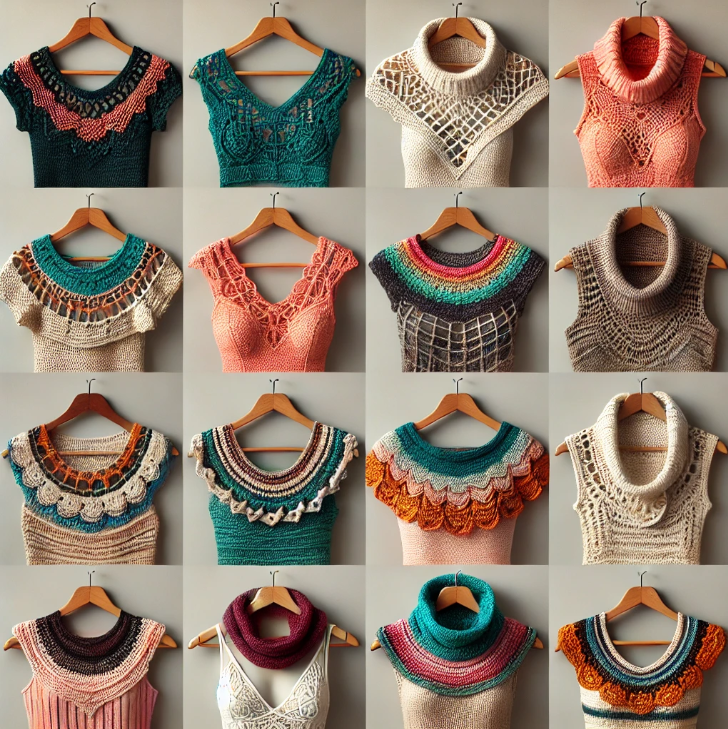
Are you curious about all the different neckline options you can use in your crochet sweaters and handmade tops? Whether you’re planning your next crochet garment or designing a simple summer top from scratch, the neckline plays a huge role in shaping the final look and fit.

In this guide, you’ll find a clear breakdown of the most popular crochet necklines, like the classic Crew Neck, Scoop Neck, V-Neck, Boat Neck, and Square Neck, along with how each one is constructed and how to accurately size a crochet neckline for any custom garment.

If you’re exploring crochet design or improving the fit of your handmade sweaters, this is the perfect place to start.

Types of Necklines

When designing or choosing a crochet garment, there are several options for necklines, each giving a different style and look. Here are some popular options:

1. Crew Neck

  • Description: A rounded, high neckline that sits close to the base of the neck, offering a classic and simple silhouette.
  • Use For: T-shirts, sweaters, and casual tops, providing a timeless and versatile neckline option.
  • How to Create:
    • Bottom-up construction: Begin with a foundation chain matching the neckline circumference, then work evenly in rounds or rows to maintain a smooth, circular shape.
    • Top-down construction: Shape the neckline directly into a yoke using short rows, ensuring the curve sits comfortably at the base of the neck.
    • Finish with a neat crochet trim or subtle edging to reinforce the shape and provide a polished finish.
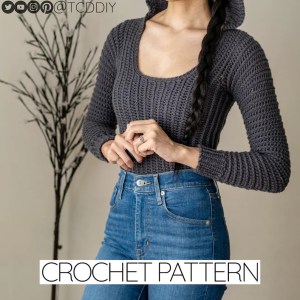
Crew neck crochet sweater
Crew Neck

2. Scoop Neck

  • Description: A U-shaped neckline that is lower and wider than a crew neck, often extending to the collarbone or slightly below, creating a gentle, open curve.
  • Use For: Dresses, summer tops, and relaxed sweaters. Ideal for garments that benefit from a subtly more open neckline than a traditional crew.
  • How to Create:
    • Bottom-up construction: Shape the curve using decreases along the neckline edges, adjusting depth for a flattering fit.
    • Top-down construction: Work increases or start with a wider initial chain/round to achieve the desired scoop width.
    • Finish the edge with a simple crochet trim or decorative border to maintain shape and add a polished touch.
Scoop neck crochet top
Scoop Neck

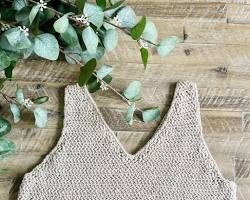
3. V-Neck

  • Description: A neckline that forms a “V” shape, which can be shallow or deep depending on the design.
  • Use For: Sweaters, cardigans, and tops. It’s a flattering and versatile choice for many garment types, particularly cardigans.
  • How to Create:
    • Work decreases on either side of the center front to shape the “V,” reducing one stitch inward on each side at regular intervals until the desired depth is achieved.
    • For top-down designs, short rows can be used to shape the neckline smoothly, creating the necessary angle and depth without breaking the yarn.
    • Adjust the depth and width according to the style and fit desired, keeping edges neat for a polished finish.
V neck crochet top
V Neck

4. Boat Neck

  • Description: A wide, shallow neckline that extends from shoulder to shoulder, often just above or at the collarbone. This is the defining feature; it mimics the shape of a boat and sits high across the chest.
  • Use For: Sweaters, tunics, and elegant tops. It is often used for a more sophisticated or slightly retro look.
  • How to Create:
    • Top-down construction: Begin with a wide chain or work rapid increases to achieve the full shoulder-to-shoulder width. Keep the neckline horizontal and balanced across the chest.
    • Bottom-up construction: Work the neckline straight across, avoiding decreases in the center, and maintain wide shoulder sections.
    • Finish with a clean edge or subtle ribbing to reinforce shape and provide a polished finish.
Boat Neck

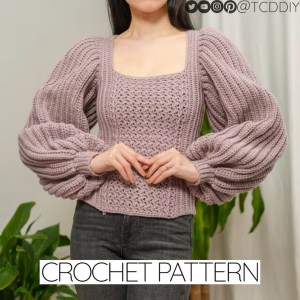
5. Square Neck

  • Description: A neckline that forms a square or rectangular shape, characterized by its sharp, geometric corners.
  • Use For: Tops, dresses, and formal wear. It is often associated with more structured or vintage-inspired designs.
  • How to Create: Crochet the neckline to form a square or rectangular shape, using increases and decreases strategically to define the corners. For sharp, precise corners, work a distinct decrease or skip a stitch at each corner point to prevent rounding. The center portion of the neckline is worked straight, without shaping, to maintain the clean, rectangular appearance.
Square Neck

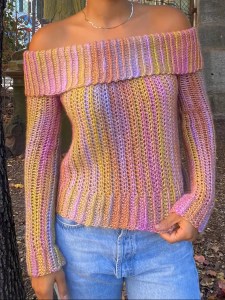
6. Off-the-Shoulder

  • Description: A neckline that rests below the shoulders, exposing the shoulders and sometimes part of the upper arms. Also known as a Bardot style, it creates a relaxed yet elegant silhouette.
  • Use For: Summer tops, dresses, and evening wear that benefit from a flattering, breezy neckline.
  • How to Create: Crochet a wide neckline band designed to sit comfortably below the shoulders. Reinforce the edges with a neat crochet trim, and you can add elastic, a drawstring, or gentle shaping to ensure the neckline stays in place without stretching out.
Off the shoulder crochet top
Off-the-Shoulder

7. Mock Neck

  • Description: A high, short neckline that stands up slightly but does not fold over. Think of it as the lighter, more modern cousin of the turtleneck.
  • Use For: Sweaters and tops where you want a clean silhouette without the bulk of a full turtleneck.
  • How to Create: After finishing the yoke or neckline opening, work upward for several rows using ribbing (like front post/back post stitches) or a dense stitch pattern that naturally stands up. Using a slightly smaller hook can help the neckline stay structured and prevent it from collapsing.
Mock neck crochet sweater
Mock Neck

8. Cowl Neck

  • Description: A soft, relaxed neckline that drapes in gentle folds around the neck, creating a cozy, gathered look.
  • Use For: Warm, comfortable sweaters, dresses, and cold-weather garments where you want extra drape and softness.
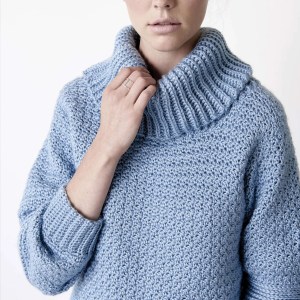
  • How to Create: Work a neckline that’s both wider and taller than a standard neckband. After completing the yoke or neckline opening, crochet upward in the round to build height, allowing the fabric to naturally fold and drape. Using a larger hook size or a drapey stitch pattern can help the cowl fall beautifully.
Crochet cowl neck sweater
Cowl Neck

9. Keyhole Neckline

  • Description: A neckline featuring a small, keyhole-shaped opening, typically secured with a button, loop, or tie for a delicate, elegant finish.
  • Use For: Tops, dresses, and garments that benefit from a subtle focal detail.
  • How to Create: After completing the main neckline, leave a small vertical or teardrop-shaped opening at the center front. Reinforce the edges with a neat crochet edging (e.g., single crochet or picot) to maintain shape. Add a button and loop, tie, or decorative closure to finish the opening securely while preserving its decorative effect.
Crochet keyhole
Keyhole Neckline

10. Henley Neckline

  • Description: A casual neckline featuring a short buttoned placket extending from a round or scoop base, adding functional and stylish detail.
  • Use For: Casual tops, sweaters, and relaxed garments that benefit from easy fastening and layered looks.
  • How to Create: Begin with a standard crew or scoop neckline. Crochet a vertical placket down the center front for the desired length. Reinforce the placket edges with single crochet or half-double crochet to prevent stretching. Add evenly spaced buttonholes or slits, then attach buttons for a clean, functional finish.
Henley crochet sweater
Henley Neckline

With these crochet neckline styles, you can tailor each design to fit any garment, from casual tops to elegant dresses, giving you endless opportunities to combine shape, function, and style in your creations.

Crochet Necklines: Types and how to crochet them

How to Determine Neckline Sizing

  1. Measure Your Neckline:
    • Circumference: Use a flexible measuring tape to measure around your neck where the neckline will sit. Decide if you want the neckline to be snug or loose and adjust your measurement accordingly.
    • Depth/Height: Measure from the base of your neck to where you want the neckline to start (e.g., high on the shoulders for a crew neck, or lower for a scoop or V-neck).
  2. Choose the Neckline Style (see above)
  3. Add Ease:
    • For comfort, add a bit of extra space to your measurements. Typically, you’d add about 1-2 inches (2.5-5 cm) to the circumference measurement for ease.
  4. Create a Neckline Template:
    • Sketch out your desired neckline style based on your measurements. This will help you visualize the shape and depth of the neckline.
Nicki Byrnes Crochet Necklines

Making the Neckline

  1. Swatch and Gauge:
    • Make a gauge swatch with your chosen yarn and hook to ensure your stitches match the pattern. This is crucial for making sure your neckline will fit correctly.
  2. Start with a Foundation Row – For Example:
    • Crew Neck: Begin by crocheting a foundation row that matches the circumference of your neckline measurement plus ease.
    • Scoop or V-Neck: You might start with a wider foundation and then shape the neckline using decreases or increases.
  3. Shape the Neckline – For Example:
    • Crew Neck: Work in the round or back-and-forth rows to build up the height of the neckline, using your measurements as a guide.
    • Scoop Neck: Decrease stitches gradually to create a U shape. You can do this by reducing stitches at regular intervals.
    • V-Neck: Work decreases to create the V shape. You might need to shape the decreases so that they create a symmetrical V.
  4. Finish the Neckline – For Example:
    • Crew Neck: Add finishing rounds or rows as needed to smooth out the neckline and provide a clean edge.
    • Scoop or V-Neck: Add edging (such as single crochet, half-double crochet, or a decorative stitch) to finish the neckline and provide stability.
  5. Try On and Adjust:
    • Try on your sweater as you work on the neckline. Adjust as needed by adding or subtracting rows, stitches, or shaping elements to ensure it fits comfortably.
  6. Block the Neckline:
    • After completing the neckline, you may want to block your sweater to help the shape settle and to achieve the desired fit. This is completely optional!

With a solid understanding of crochet neckline styles, shaping techniques, and accurate sizing, you’ll be able to design or customize any crochet top or sweater with confidence, and create beautifully fitting garments that match your unique style every time.

My Retro Revival Granny Square Sweater features a Mock Neck

Modern Boho Hanging Crochet Basket

By Nicki Byrnes

As seen in the April issue of Crochet World

With its prominent texture and use of earthy colors, this hanging basket gives modern boho vibes. The neutral off-white yarn paired with the warm mustard lend to the creative and carefree bohemian aesthetic. The wrapped embellishment around the strap creates an eclectic feel and the chunky, cozy yarn brings it to life.

A unique feature I added for this basket is its functional flat back, which makes it ideal for resting against a wall, door, or other surface. Having a sturdy backside allows the basket to display its contents prominently. It also features a semi-circle bottom to prevent sagging or stretching as it holds items upright.

For this issue of Crochet World, I did an interview with Annie’s social media team. They asked great questions, some of which may be helpful to those following my pattern. I’m sharing an excerpt here.

  1. What inspired you to create the design?
    • I have a space in my house with a bench and hooks that becomes a catch-all. Things get piled on the bench, which drives me crazy. This spurred the idea to make a basket to help with organization with features unlike other hanging basket patterns I’d seen.
  2. Are there any special tips or tricks that our readers might like to know as they crochet your pattern? 
    • When single crocheting around the handle to create the strap feature, work the single crochet stitches about 1/4″ apart and not too tight.
  3. What advice would you give to someone that is learning to crochet?  
    • Don’t give up! I teach crochet classes and hear people say learning feels unnatural. And it does…until it doesn’t. With practice and repetition, there comes a moment where things click and you find your rhythm.
  4. Is there anything else you’d like to share with our readers? 
    • To use the Modern Hanging Basket to hold a plant, put the plant and soil (or plant cutting and water) in an upcycled container like a used, washed 32 ounce yogurt container.

Gingham Grove Dishcloth 🍊🍓Crochet Design & Pattern

By Nicki Byrnes

Check out my fun new crochet dishcloth pattern!

Do they look like little picnic blankets to you? I created these crochet dishcloths for the April issue of I Like Crochet using a technique that mimics gingham, the classic picnic blanket pattern. I added flat fruit appliques and sewed them on, furthering the idea of a spring lunch al fresco.

To create the gingham effect, you carry all 3 strands of yarn as you work, crocheting over the colors not in use. Here’s a quick, close-up video that shows how it’s done. This minimizes the number of yarn ends that would need to be woven in at the end, which would be an insane amount if you tied off every time you switched colors.

“These charming creations bring the freshness of a picnic indoors with their gingham design and fruity flair.”

– I Like Crochet

It’s difficult to see in the photo above, but clearer in the photo below, that I added a pop of color via a single crochet border around the gingham square. Onto that, I crocheted a ruffle border for a touch of whimsy and fun. These are not your grandma’s dishcloths!

Nicki Byrnes Crochet Dishcloth Fruit Gingham

Let me know what you think 🍊🍓